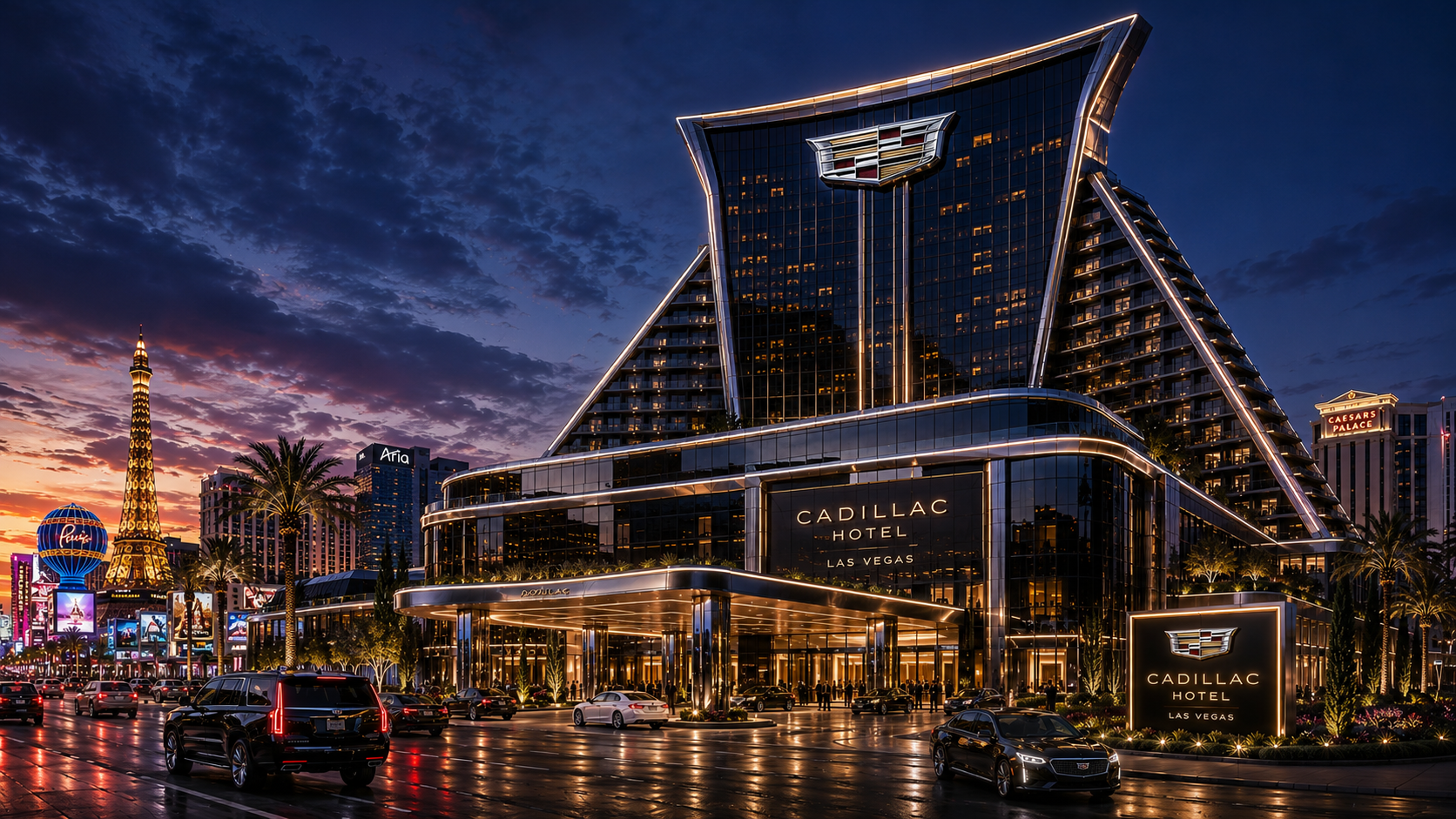
I have always been a Cadillac fan.
When I was in middle school, my uncle would pick me up in his Cadillac from the 1990s. I remember how special it felt to climb into that car. It was more than transportation. It had a presence. The comfort, design, and quiet confidence made an ordinary ride feel important.
By the time I reached high school, I carried a used Cadillac hood ornament on my keychain, even though I did not own a Cadillac. The symbol represented something to me before I could afford the product itself.
To me, Cadillac represented style, class, comfort, and premium care.
That is what a strong brand can do. It creates an expectation before the experience begins.
What Would a Cadillac Hotel Feel Like?
Imagine Cadillac announcing plans to open a one-of-a-kind luxury hotel, in the center of the Las Vegas strip.
Before the hotel was built, before the first room was reserved, and before anyone stepped into the lobby, people would already have expectations.
They might imagine a sleek building with architectural details inspired by the Cadillac crest. Escalades and luxury sedans might line the valet entrance. The lobby could feature polished surfaces, soft lighting, comfortable seating, and subtle references to the design of Cadillac interiors.
The modern would feel like the future. The future would feel obtainable. The luxury you imagine would become your reality.
Guests would expect attentive service, beautiful rooms, thoughtful amenities, and an experience that felt refined without being unapproachable.
The sheets would be premium Egyptian cotton. The headboard might feature plush, patterned leather. The curtains could open as you entered the room, revealing an incredible view of the Las Vegas Strip and making even a standard room feel like a penthouse suite.
The shower? Like nothing you had ever experienced.
Guests would expect the hotel to feel like Cadillac.
Cadillac would not be entering the hotel industry with a blank slate. Its reputation would enter the building first.
Strong Brands Can Change Lanes
A Cadillac hotel may be imaginary, but the idea of a company successfully crossing into another industry is not.
Marriott offers one of the clearest examples.
Before Marriott became one of the most recognizable names in lodging, the company began as a nine-seat root beer stand in Washington, D.C. It expanded into Hot Shoppes restaurants and entered airline catering in 1937. Marriott remained involved in in-flight catering until 1989, but its name eventually became far more closely associated with hotels and hospitality.
Marriott changed lanes, but it did not completely abandon what made the company successful. Its early businesses centered on food, service, convenience, and caring for people who were away from home. Those same values could be transferred into the hotel experience.
The product changed. The underlying promise did not.
Apple provides another example. It began as a computer company but eventually expanded into music players, smartphones, tablets, watches, entertainment, payments, cloud storage, and digital services. Each product entered a different part of the customer's life, but the broader brand promise remained recognizable: intuitive technology, thoughtful design, simplicity, and an interconnected experience.
Sony followed a similar path. Its origins were in electronics and sound, but the company later expanded into music, motion pictures, gaming, imaging technology, semiconductors, and other forms of entertainment. Sony did not limit itself to making devices. It became involved in creating the music, movies, games, and experiences those devices could deliver.
These companies demonstrate that a brand does not have to remain trapped inside the industry where it started. However, crossing into a new industry works best when customers can still recognize the company's identity.
Reputation Travels With the Brand
A strong reputation gives a business permission to expand.
When customers trust a company's quality, creativity, service, or attention to detail, they may be willing to follow it into unfamiliar territory. They are not only purchasing a new product. They are transferring their previous experiences and expectations to a new offering.
That transfer can be powerful, but it also creates pressure.
A Cadillac hotel could not simply place the Cadillac crest above the entrance and expect the name to carry the entire experience. The reservation process, valet service, room design, customer communication, cleanliness, amenities, and hospitality would all need to support the promise associated with the brand.
A beautiful logo cannot compensate for poor service. A premium name cannot overcome an ordinary experience.
The hotel would need to deliver the same feeling that made me notice Cadillac as a child. It would need to communicate that someone thought carefully about the details and cared about the person receiving the experience.
That is where brand reputation becomes more than marketing.
What Does Your Brand Give You Permission to Do?
Every business should consider what customers expect when they encounter its name.
Do they expect creativity, dependability, warmth, innovation, luxury, affordability, speed, or personal attention? Does the experience reinforce that expectation? Could the reputation of the business carry successfully into a new service, product, market, or platform?
Cadillac represents style, class, comfort, and premium care to me because that meaning has been reinforced over time. It began with the experience of riding in my uncle's Cadillac. It continued with the hood ornament I carried on my keychain in high school.
Long before I became a customer, the brand had already built a relationship with me.
That is the real power of reputation.
A powerful brand does more than help people recognize a business. It creates expectations, builds trust, and opens the door to new opportunities.
Your brand is already saying something before a customer ever interacts with you. The question is whether it is saying what you intended.
If your brand no longer reflects the reputation you want to build, it may be time to rethink, refine, or reintroduce it.
What arrives in the minds of your customers when they hear your name?